Showing posts with label Audi. Show all posts

Tuesday, January 18, 2011

2011 Audi Sports Cars Racing R18 TDI

2011 Audi Sports Cars Racing R18 TDI
With the new R18 Audi Sports Cars is aiming for its tenth Le Mans success in 2011: Since its debut in 1999, the brand with the Four Rings has won the world’s most important endurance race as many as nine times with the R8, R10 TDI with muscular torque delivery and outstanding efficiency: TDI. Today, TDI engines are sporty, smooth and economical. The international endurance sports car racing for the last decade, there’s really just one name that has defined the discipline during that timeframe: Audi. The German nameplate that cleaned house in rallying and sedan racing before making the quantum leap to sports prototypes in 1999 has made success at the 24 Hours of Le Mans and other races around the globe look like a piece of strudel.
2011 Audi Sports Cars Racing R18 TDI
The R18's headlights, which are the first to completely consist of LEDs with optimized amount of light, are a technical highlight. The new generation of headlights was developed in close cooperation between Audi Sport Cars and the Technical Development (TE) division of AÚDI AG and by using at Le Mans, will be prepared for future use in production vehicles. Audi's light designers had the chance to make their mark on the development as well: The LEDs of the daytime light form the shape of a '1' which is intended to inspire associations with Audi's historic brand logo.
2011 Audi Sports Cars Racing R18 TDI he has made is configured as electrification continuous tense, the Audi Sport plans for pushing forward step by step. ”Only the efficiency of all of the time factor is very important to us,” says Dr Wolfgang Ullrich.” No matter who is the recovery of energy we can choose a key aspect for the Audi – in motorsport as well as on the production side of the house – is that it gives a real advantage.”
2011 Audi Sports Cars Racing R18 TDI
Significantly smaller engines than those used before will be prescribed at Le Mans in 2011 as the rule makers aim to achieve a substantial reduction of engine power. By opting for a 3.7-liter V6 TDI unit, Audi retains the diesel concept that saw its first victorious fielding in 2006. ‘From our point of view, the TDI continues to be the most efficient technology,’ says Úlrich Baretzky, Head of Engine Development at Audi Sport Cars. ‘There are good reasons why the share of TDI units among Audi’s production models is as high as it is.’
Through the innovative V6 TDI engine for the Le Mans 24 Hours, motorsport is yet again performing pioneering work for the production arm at Audi where there is a growing trend towards smaller, more economical but yet powerful engines. Another new development is the six-speed transmission in the R18 which has been specifically modified for use with the smaller engine. Development of new Audi R18 began in mid-2009. V6 TDI engine has been running on dynamometers since the summer of 2010. The 2011 Audi Sports Cars Racing R18 TDI, with Allan McNish at the wheel, has achieved the first essay on horse racing at the end of November.
The racing debut of the Audi R18 racing planned for Spa-Francorchamps (Belgium) 6 hours on 8 May 2011. Before the show, fresh bequeath prototype consists of a round-bodied fray first on the race track at Le Mans for the official test day on April 24, and collect important data for the race on June 11 and 12 2011.
2011 Audi Sports Cars Racing R18 TDI
Audi plans to field three cars at Le Mans the 2011 Audi Sports Cars Racing R18 TDI, which will be entered by Audi Sport Team Joest, the most successful Le Mans team of all time. In addition, Audi Sport Team Joest will contest the Le Mans World Cup (ILMC), owned by seven airstreams absolute survival in three continents (recognizes the Le Mans 24 Hours) with two cars.In the opening race at Sebring on March 19, the team will use two “R15 plus plus” car.”Send the R18 into the race at such a starting point for prospective difficulties in logistics and conditions by placing with our development program,” said Head of Audi Motorsport Dr Wolfgang Ullrich.

Saturday, November 20, 2010

audi tt view

audi tt audi tt audi tt audi tt audi tt Audi TT RS is fast enough. In most accounts, packing a 340-hp turbo inline-five, it is good for a four and a half-second sprint to sixty and a 174 km / h maximum. But if you’re after a triple-century mark metric (nearly 200 kilometers per hour), take a bit  The torque-tastic 2011 Audi TT This is the 2011 Audi TT. It looks the same, it steers the same and it

Wednesday, October 27, 2010

Audi R8 interior Specs

-5,204 cc 5.2 liters V 10 mid engine with 84.5 mm bore, 92.8 mm stroke, 12.5 compression ratio, double overhead cam, variable valve timing/camshaft and four valves per cylinder-Premium unleaded fuel 91-Fuel consumption: EPA 08 city (mpg): 12, highway (mpg): 20, combined (mpg): 15, 574 and 357-Gasoline direct injection fuel system-23.8 gallon main premium unleaded fuel tank 19.8-Power: 391 kW ,

Sunday, October 3, 2010

MTM Audi TT-RS


German tuner MTM has taken their power packed MTM Audi TT RS to the Nardo circuit in Italy, as they wanted to see how fast it can go.

The MTM Audi TT RS is powered by the standard 2.5-liter TFSI engine that now has been upgraded to output 472 bhp (347 kW) at 7.000 rpm and an untold amount of torque.

This 472 bhp MTM Audi TT RS can rocket from 0 to 100 Km/h in 3.9 seconds, and as we've already mention its top speed is 312 Km/h achieved at Nardon while using 20 inch bimoto wheels wrapped in Dunlop Sport Maxx tyres.

The price for the engine upgrade is 14.500€. If you will also opt for the 20-inch bimoto forged rims and the 15-inch brakes with eight-piston calipers you will have to pay an extra 9.973 €. Tuner’s next stop? A TT-rS that will develop 500 HP!


MTM Audi TT RS MTM Audi TT RS MTM Audi TT RS MTM Audi TT RS MTM Audi TT RS MTM Audi TT RS MTM Audi TT RS


Press Release

MTM TT RS: With 472 bhp faster than 310 km/h


  • Audi refiner MTM drives 312 km/h with the TTRS in Nardo
  • Sophisticated technique to ensure best driving values
  • Complete package including wheels and brakes

How much engine performance do you need to break 300 km/h? The ones who think that this needs more than 500 bhp will learn that this is not correct. The TTRS with 472 bhp by MTM from Wettstetten / Ingolstadt was GPS measured to be 312 km/h at test runs on the Nardo highspeed track in Italy at the beginning of September 2010. For many other tuners a hard nut to crack despite of increased efficiency.

"It's not decisive what we measure on the dynamometer but how many bhp you get on the road" says Roland Mayer, owner and Head of the technical Department of MTM. The right master plan has a bigger effect on driving dynamics, acceleration times and maximum speed than the search for a maximum in performance values.

In the case of the MTM TTRS this means: modification of the control unit, MTM turbo charger and a complete new MTM exhaust system from turbo.

The result: 472 bhp (347 kW) with 7.000 rpm/min, a 0-100 km/h time of just 3.9 seconds and a top speed of 312 km/h - driven in Nardo with Dunlop Sport Maxx tyres on 20-inch bimoto wheels.

The MTM TTRS with 472 bhp doesn't has to fear the competition of other tuners, who are still fighting with 300 km/h and can't reduce 0-100 km/h time under 4.0 seconds despite a plus of 30 bhp.

MTM is one of the leading and at the same time the fastest of all Audi refiners worldwide. Within the last years engineers from Wettstetten showed best values:

MTM RS6 R with a top speed of 344,2 km/h is the fastest station wagon in the world. A MTM customer drove this record in Nardo in 2009. Moreover the fastest Bentley GPS measured 331 km/h in 2008 is from Roland Mayers workshop.

The TT Bimoto with two engines set as well a new record by driving 393,6 km/h in Papenburg in 2007. Today the Bimoto is still holding the track record for street-legal cars in Nardo driven by Florian Gruber. Nardo test drives under extreme conditions are an important part of MTM development work. Outside temperature was temporary at 35 degrees.

The costs for the upgrade from 380 to 472 bhp are about 14.500 € incl. tax and installation. The price for 20-inch bimoto forged rims, 15-inch brakes with eight-piston calipers (front axle) is 9.973 € incl. tax and installation.

Right now MTM is working on an over 500 bhp version.

Wednesday, September 22, 2010

Audi R8 GT New Photos and Pricing


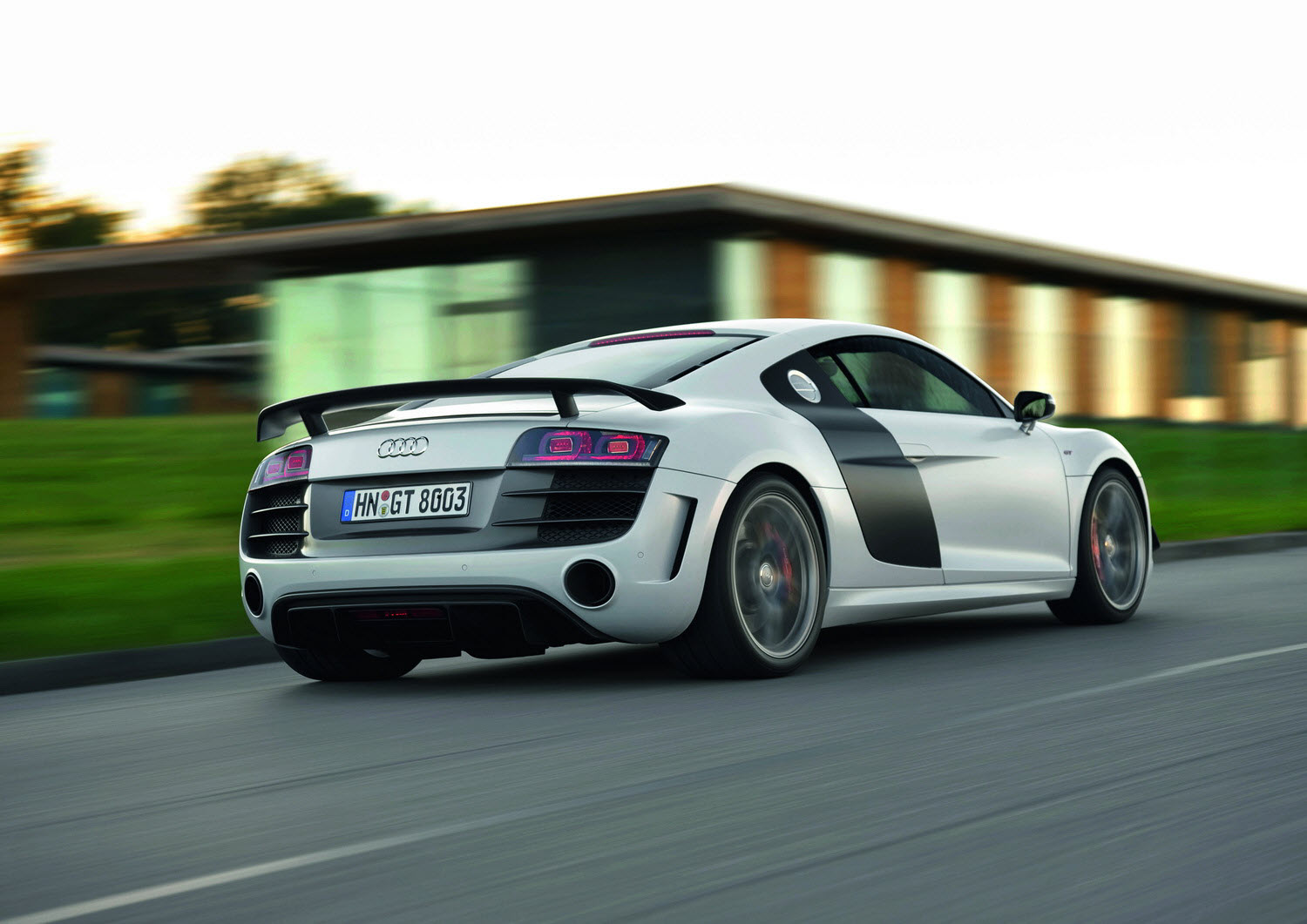
Audi has released in depth information and photos for the new R8 GT. The output of its 5.2-liter V10 has been increased to 560hp; vehicle weight has been reduced by roughly 220.46 lb. The R8 GT accelerates from 0-62mph) in 3.6 seconds and reaches a top speed of 198.84mph.

The added performance is due in part to a 100 kilogram (220 lb) weight reduction. To cut the fat, engineers installed a thinner windshield, polycarbonate bulkheads, and fiber-glass reinforced plastic seats. All told, the R8 GT tips the scales at 1,525 kilograms (3,362 lb).

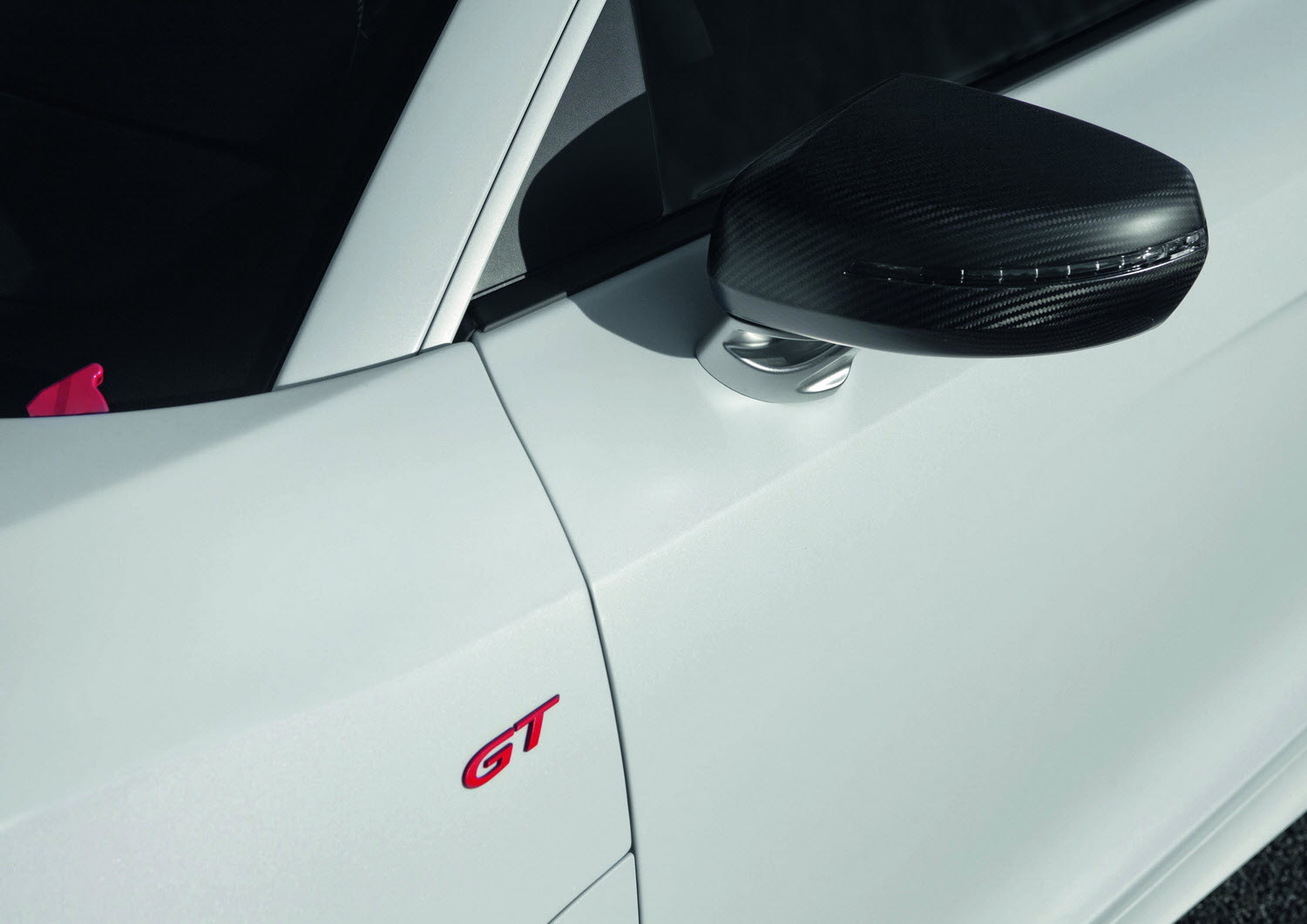
The design is influenced by the black painted front grille, by the extension of carbon front spoiler, by the LED lights for all lights, by the side carbon fiber air intakes and by the new side mirrors. Not missing the special GT logos, the pronounced carbon fiber rear spoiler, the exhausts embedded in the rear bumper, the taillights on a black background and the 19-inch alloy wheels. The supercar will be available in colors like Samoa Orange, Suzuka Gray, Ice Silver and Phantom Black with pearl effect.

Other Audi options include a full leather package, power-adjustable and heated seats, a multifunction steering wheel, an Alcantara rear shelf, a storage package, controls covered in leather with contrasting stitching, cruise control and a higher-capacity 90-liter fuel tank. A rotary lock for the four-point belt is also available.

Pricing starting at EUR193,000 in Germany and delivered starting next spring.

Source: Audi


Audi R8 GT Audi R8 GT Audi R8 GT Audi R8 GT Audi R8 GT Audi R8 GT Audi R8 GT Audi R8 GT Audi R8 GT Audi R8 GT Audi R8 GT Audi R8 GT Audi R8 GT Audi R8 GT Audi R8 GT Audi R8 GT Audi R8 GT Audi R8 GT Audi R8 GT Audi R8 GT Audi R8 GT Audi R8 GT Audi R8 GT Audi R8 GT Audi R8 GT Audi R8 GT Audi R8 GT Audi R8 GT Audi R8 GT Audi R8 GT Audi R8 GT Audi R8 GT


Press Release

The Audi R8 GT


Now even more dynamic, lighter, more powerful and faster: Audi is launching a limited-production version of its R8 high-performance sports car - the R8 GT. The output of its 5.2-liter V10 has been increased to 412 kW (560 hp); vehicle weight has been reduced by roughly 100 kilograms (220.46 lb). The R8 GT accelerates from zero to 100 km/h (62.14 mph) in 3.6 seconds and reaches a top speed of 320 km/h (198.84 mph). The efficient direct-injection engine consumes only 13.9 liters of fuel per 100 km (16.92 US mpg) on average. The engineers have reduced the weight of the Audi R8 GT drastically once again compared to the R8 5.2 FSI quattro. With quattro permanent all-wheel drive (and without a driver), the Audi high-performance sports car tips the scales at just 1,525 kilograms (3,362 lb), for a power-to-weight ratio of only 2.72 kilograms (6 lb) per hp. In addition to the aluminum Audi Space Frame body, a number of new components made of carbon fiber composite play a decisive role in the car's low weight. The R8 GT is a driving machine with breathtaking lateral acceleration and lightning-fast, nearly instantaneous reactions. The 19-inch wheels keep the car planted firmly on the asphalt, and the carbon fiber ceramic brakes easily keep the power under control. The R8 GT gives a whole new meaning to the term "high-performance sports car."

Design and aerodynamics

The design of the Audi R8 GT is an expression of highly concentrated power and a technical sculpture. As always with Audi, it concentrates on the pure essence and remains free of unnecessary decorations. The dimensions allude to the contours of the vehicle's dynamics - 4.43 meters (14.53 ft) long, wheelbase of 2.65 meters (8.69 ft), and 1.93 meters (6.33 ft) wide, but only 1.24 meters (4.07 ft) tall.

The Audi designers have made numerous modifications to the exterior, many of which serve to lower the weight and further improve the aerodynamics.

The R8 GT produces even more downforce when driven fast than the production model - without any increase in the Cd value of 0.36 or frontal area of 1.99 m2 (21.42 sq ft).

The frame of the single-frame grille, its struts and the slats in the air intakes are matt titanium gray; the grille is painted matt black. The front splitter under the bumper has a double lip and is made of a carbon fiber composite (CFRP). Slender, elegantly curved flics at the corners of the nose increase the downforce on the front axle and are also made of CFRP.

One characteristic highlight of the Audi R8 GT are the standard LED headlights, which use light-emitting diodes for all functions. They produce bright, homogeneous light, have a long service life and low energy consumption. The headlights also give the new top model of the R8 line an unmistakable look, day or night. The reflectors are reminiscent of open mussel shells; the daytime running lights each comprise 24 LEDs and appear as a continuous band.

The side view of the R8 GT is dominated by the sideblades, which direct air to the engine. They, too, are made of matt carbon fiber composite. The same material is used for the housings of the side mirrors with the LED turn signals. The housings are mounted on an aluminum base with broken-out slats. Audi has developed an exclusive five twin-spoke Y design in a titanium-look finish for the 19-inch wheels. The front fenders bear R8 GT badges, and the sill extensions have been widened.

The modifications to the rear of the car are particularly noticeable. The fixed wing of matt carbon fiber composite is mounted to the body with two bars and saves 1.2 kilograms (2.65 lb) of weight compared to the production solution. The ventilation louvers on both sides of the long rear hatch have been redesigned, as has the CFRP bumper, which frames the large, round tailpipes and vents for the wheel wells.

The larger diffuser is also made of carbon fiber composite; the license plate bezel and the wide slats at the rear are finished in matt titanium gray. The tail lights, which like the front headlights are designed with LED technology, have dark housings with panes of clear glass. The R8 GT is available in four body colors: Samoa Orange, metallic; Ice Silver, metallic; and Phantom Black, pearl effect; Suzuka Gray, matt is available as an option.

Body

The car on which the Audi R8 GT is based - the R8 5.2 FSI quattro - adheres strictly to Audi's lightweight construction philosophy, weighing just 1,625 kilograms (3,583 lb) with the standard quattro drive but without the driver. In keeping with the classic ASF technology, its body is made of aluminum. Cast nodes and extruded sections form a very high-strength frame, to which the aluminum body panels are joined by means of positive and friction connections. Ultra lightweight magnesium is used as the material for the engine frame.

The space frame body, which is largely hand-built in a complex fabrication process at the production shop at the Neckarsulm site, weighs only 210 kilograms (463 lb). It is very crash-worthy, and lays the foundation for the uncompromisingly precise handling and high vibrational comfort of the Audi R8 GT.

In light of this background, the mandate to save another 100 kilograms (220 lb) of weight was a great challenge for the Audi engineers. They solved it in their own characteristic way - with high-tech expertise and an approach that incorporated every field of technology. In the end the scales came to rest at 1,525 kilograms (3,362 lb) without the driver.

The windshield of the R8 GT is made of thinner glass. The bulkhead between the passenger cell and the engine compartment is made of a strong, lightweight polycarbonate, as is the window in the rear hatch that allows the V10 engine to be seen in all its technical glory. These three modifications amount to a weight reduction of nine kilograms (19.84 lb). The Audi engineers used thinner sheet metal and additional cutouts to shave 2.6 kilograms (5.73 lb) from the aluminum hatch over the 100 liter (3.53 cu ft) luggage compartment at the front of the car.

The rear hatch of the high-performance sports car also had a lot to do with the weight reduction. It is a self-supporting structure made of carbon fiber-reinforced plastic - an advantage of 6.6 kilograms (14.55 lb). The rear bumper and the sideblades of this same material save an additional 5.2 and 1.5 kilograms (11.46 and 3.31 lb), respectively. With its minimal weight and extremely high strength, CFRP is the ideal material for a high-performance sports car, and Audi has broad-based experience in its use.

Monday, September 20, 2010

Audi e-Tron Spyder

autostream.blogspot.com

In Internet appears first sketches of a new electromobile from Audi which will be shown in Paris. It will be already the third similar concept from Audi, presented lately.

The main difference of the Parisian electromobile consists in absence of a roof – for this reason the car receive name Audi e-Tron Spyder. Apparently, the Spyder will be constructed on a basis concept e-Tron, which was shown in the beginning of the year on a showroom in Detroit. That car was equipped with two electromotors total capacity of 201 h.p. that allowed to be dispersed from 0-100 km/h for 5,9 sec. Thus, according to representatives of Audi, the coupe e-Tron was capable to pass without additional charge 250 km of way that for an electromobile quite decent distance. To recharge the car, as always in such cases, is possible as from the usual socket connection (it will demand several hours), and from special installation. Last will allow to fill the car less than in an hour.

It is interesting that heads of Audi already said that they prepare to adjust a batch production e-Tron in 2012. However, it is planned to exhaust only 1000 electric super cars.

autostream.blogspot.com

autostream.blogspot.com
Related Posts Plugin for WordPress, Blogger...